Last year it reached the point where El Salvador’s health minister, Dr. Maria Isabel Rodriguez, appealed for international help, saying the epidemic was undermining health systems. Wilfredo Ordonez, who has harvested corn, sesame and rice for more than 30 years in the Bajo Lempa region of El Salvador, was hit by the chronic disease when he was 38. Ten years later, he depends on dialysis treatments he administers to himself four times a day. “This is a disease that comes with no warning, and when they find it, it’s too late,” Ordonez said as he lay on a hammock on his porch. Many of the victims were manual laborers or worked in sugar cane fields that cover much of the coastal lowlands. Patients, local doctors and activists say they believe the culprit lurks among the agricultural chemicals workers have used for years with virtually none of the protections required in more developed countries. But a growing body of evidence supports a more complicated and counterintuitive hypothesis. The roots of the epidemic, scientists say, appear to lie in the grueling nature of the work performed by its victims, including construction workers, miners and others who labor hour after hour without enough water in blazing temperatures, pushing their bodies through repeated bouts of extreme dehydration and heat stress for years on end. Many start as young as 10. The punishing routine appears to be a key part of some previously unknown trigger of chronic kidney disease, which is normally caused by diabetes and high-blood pressure, maladies absent in most of the patients in Central America.
“The thing that evidence most strongly points to is this idea of manual labor and not enough hydration,” said Daniel Brooks, a professor of epidemiology at Boston University’s School of Public Health, who has worked on a series of studies of the kidney disease epidemic. Because hard work and intense heat alone are hardly a phenomenon unique to Central America, some researchers will not rule out manmade factors. But no strong evidence has turned up. “I think that everything points away from pesticides,” said Dr. Catharina Wesseling, an occupational and environmental epidemiologist who also is regional director of the Program on Work, Health and Environment in Central America. “It is too multinational; it is too spread out. “I would place my bet on repeated dehydration, acute attacks everyday. That is my bet, my guess, but nothing is proved.” Dr. Richard J. Johnson, a kidney specialist at the University of Colorado, Denver, is working with other researchers investigating the cause of the disease. They too suspect chronic dehydration.
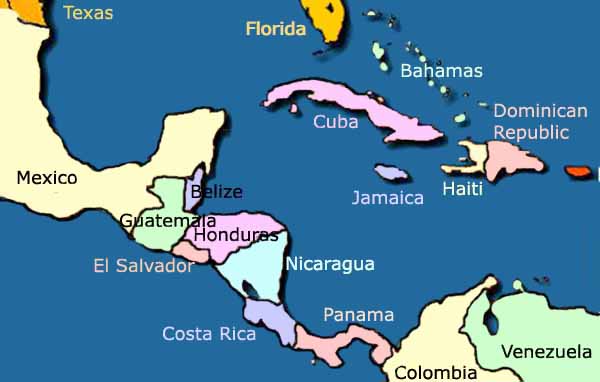
“This is a new concept, but there’s some evidence supporting it,” Johnson said. “There are other ways to damage the kidney. Heavy metals, chemicals, toxins have all been considered, but to date there have been no leading candidates to explain what’s going on in Nicaragua … “As these possibilities get exhausted, recurrent dehydration is moving up on the list.” In Nicaragua, the number of annual deaths from chronic kidney disease more than doubled in a decade, from 466 in 2000 to 1,047 in 2010, according to the Pan American Health Organization, a regional arm of the World Health Organization. In El Salvador, the agency reported a similar jump, from 1,282 in 2000 to 2,181 in 2010. Farther down the coast, in the cane-growing lowlands of northern Costa Rica, there also have been sharp increases in kidney disease, Wesseling said, and the Pan American body’s statistics show deaths are on the rise in Panama, although at less dramatic rates.
While some of the rising numbers may be due to better record-keeping, scientists have no doubt they are facing something deadly and previously unknown to medicine. In nations with more developed health systems, the disease that impairs the kidney’s ability to cleanse the blood is diagnosed relatively early and treated with dialysis in medical clinics. In Central America, many of the victims treat themselves at home with a cheaper but less efficient form of dialysis, or go without any dialysis at all. At a hospital in the Nicaraguan town of Chinandega, Segundo Zapata Palacios sat motionless in his room, bent over with his head on the bed. “He no longer wants to talk,” said his wife, Enma Vanegas. His levels of creatinine, a chemical marker of kidney failure, were 25 times the normal amount.
 |
| In the Sugar Cane |
His family told him he was being hospitalized to receive dialysis. In reality, the hope was to ease his pain before his inevitable death, said Carmen Rios, a leader of Nicaragua’s Association of Chronic Kidney Disease Patients, a support and advocacy group. “There’s already nothing to do,” she said. “He was hospitalized on Jan. 23 just waiting to die.” Zapata Palacios passed away on Jan. 26. He was 49. Working with scientists from Costa Rica, El Salvador and Nicaragua, Wesseling tested groups on the coast and compared them with groups who had similar work habits and exposure to pesticide but lived and worked more than 500 meters (1,500 feet) above sea level. Some 30 percent of coastal dwellers had elevated levels of creatinine, strongly suggesting environment rather than agrochemicals was to blame, Brooks, the epidemiologist, said. The study is expected to be published in a peer-reviewed journal in coming weeks. Brooks and Johnson, the kidney specialist, said they have seen echoes of the Central American phenomenon in reports from hot farming areas in Sri Lanka, Egypt and the Indian east coast.
“We don’t really know how widespread this is,” Brooks said. “This may be an under-recognized epidemic.” Jason Glaser, co-founder of a group working to help victims of the epidemic in Nicaragua, said he and colleagues also have begun receiving reports of mysterious kidney disease among sugar cane workers in Australia. Despite the growing consensus among international experts, Elsy Brizuela, a doctor who works with an El Salvadoran project to treat workers and research the epidemic, discounts the dehydration theory and insists “the common factor is exposure to herbicides and poisons.” Nicaragua’s highest rates of chronic kidney disease show up around the Ingenio San Antonio, a plant owned by the Pellas Group conglomerate, whose sugar mill processes nearly half the nation’s sugar. Flores and Zapata Palacios both worked at the plantation. According to one of Brooks’ studies, about eight years ago the factory started providing electrolyte solution and protein cookies to workers who previously brought their own water to work. But the study also found that some workers were cutting sugar cane for as long as 9 1/2 hours a day with virtually no break and little shade in average temperatures of 30 C (87 F).
 |
| Worker taking supplied electrolyte drink |
In 2006, the plantation, owned by one of the country’s richest families, received $36.5 million in loans from the International Finance Corp., the private-sector arm of the World Bank Group, to buy more land, expand its processing plant and produce more sugar for consumers and ethanol production. In a statement, the IFC said it had examined the social and environmental impacts of its loans as part of a due diligence process and did not identify kidney disease as something related to the sugar plantation’s operations. Nonetheless, the statement said, “we are concerned about this disease that affects not only Nicaragua but other countries in the region, and will follow closely any new findings.” Ariel Granera, a spokesman for the Pellas’ business conglomerate, said that starting as early as 1993 the company had begun taking a wide variety of precautions to avoid heat stress in its workers, from starting their shifts very early in the morning to providing them with many gallons of drinking water per day. Associated Press reporters saw workers bringing water bottles from their homes, which they refilled during the day from large cylinders of water in the buses that bring them to the fields.
Glaser, the co-founder of the activist group in Nicaragua, La Isla Foundation, said that nonetheless many worker protections in the region are badly enforced by the companies and government regulators, particularly measures to stop workers with failing kidneys from working in the cane fields owned by the Pellas Group and other companies. Many workers disqualified by tests showing high levels of creatinine go back to work in the fields for subcontractors with less stringent standards, he said. Some use false IDs, or give their IDs to their healthy sons, who then pass the tests and go work in the cane fields, damaging their kidneys. “This is the only job in town,” Glaser said. “It’s all they’re trained to do. It’s all they know.” The Ingenio San Antonio mill processes cane from more than 24,000 hectares (60,000 acres) of fields, about half directly owned by the mill and most of the rest by independent farmers. The trade group for Nicaragua’s sugar companies said the Boston University study had confirmed that “the agricultural sugar industry in Nicaragua has no responsibility whatsoever for chronic renal insufficiency in Nicaragua” because the research found that “in the current body of scientific knowledge there is no way to establish a direct link between sugar cane cultivation and renal insufficiency.”
 |
| Hard at work keeping the developed world supplied with its sugar fix |
Brooks, the epidemiologist at Boston University, told the AP that the study simply said there was no definitive scientific proof of the cause, but that all possible connections remained open to future research. In comparison with Nicaragua, where thousands of kidney disease sufferers work for large sugar estates, in El Salvador many of them are independent small farmers. They blame agricultural chemicals and few appear to have significantly changed their work habits in response to the latest research, which has not received significant publicity in El Salvador. In Nicaragua, the dangers are better known, but still, workers need jobs. Zapata Palacios left eight children. Three of them work in the cane fields. Two already show signs of disease.